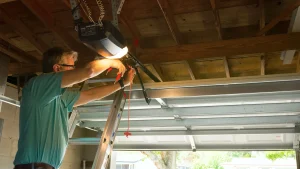

In general, your garage door should be relatively quiet whilst in operation. However, if your garage door is squeaking when opening or closing, chances are some of the parts are in need of lubrication.
If your garage door isn’t lubricated enough, and regularly, it could lead to more serious damage later on.
In this guide, we’re going to walk you through how to lubricate your garage door to prevent noise and extend the life of your garage door.
Step 1: Close Your Garage Door
First things first, you’re going to want to close your garage door to allow you access to the tracks and the rest of the moving parts on your door. Once you have closed your garage door, you need to make sure that it’s not on; disconnect your garage door from the power source after you have closed it.
Step 2: Clean the Garage Door Tracks
The tracks are what the garage door rollers ride on to open and close. Although you don’t want to lubricate these, you do want to make sure that they’re clean. Take a damp rag and wipe down the inside of both tracks to remove any dirt and debris that may have accumulated. If you’re having issues getting fine dirt out from the tracks, use a vacuum with a hose extension to suck out excess dirt and debris.
Step 3: Ensure You Have the Correct Lubricant
It’s important to note that you should use lubrication specifically for garage doors and not a standard degreaser. Using standard oil is not a good idea as it is susceptible to dirt and rust buildup and is likely to drip as opposed to lube. Make sure that you purchase the correct lubrication for garage door applications.
Step 4: Oil the Hinges
Slowly lift your garage door manually and spray each hinge where it meets the bend of the track. By doing this, it will lubricate the moving parts on the door and make the opening and closer far smoother. Use one or two sprays on each hinge.
Step 5: Lubricate the Rollers
The rollers, or the circular moving pieces on your garage door are attached to each of the hinges. Within these rollers are small ball bearings that need to be lubricated. Using the garage door approved lubricant, spray grease inside of the rollers and wipe out any excess lubricant.
Step 6: Lubricate Bearing Plates and Springs
Spray the outside of the springs and bearing plates. Generally, the springs are found towards the top of the garage door and need to be lubricated as well. The bearing plates are the moving circular parts found on both sides of the springs. Make sure to spray down the outside of the springs and close to the center of the bearing plates.
Step 7: Spray the Lock and Armbar
Point the lubricant towards the lock’s keyhole and spray it to lubricate it. Once you have lubricated the lock, spray some grease on the large armbar at the top of the garage door.
Step 8: Lubricate the Top of the Rail
The rail is where your chain rides on and should be located toward your garage’s ceiling. Spray down the top of the rail and then spread the grease around with an old rag.